
-
National mobile call charges apply
-
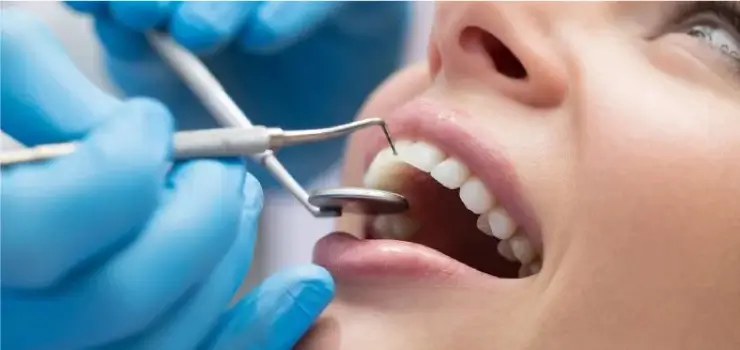
Restorative dentistry treats teeth affected by decay, fractures, wear or other loss of structure. Tooth decay develops when bacterial plaque metabolises sugars and produces acids that demineralise the tooth over time; risk also depends on fluoride exposure, hygiene, diet, saliva and individual factors. Early lesions without a cavity can, in some cases, be controlled without a restoration. When there is significant structural loss, treatment aims to remove only the necessary tissue and rebuild the tooth with a suitable material.
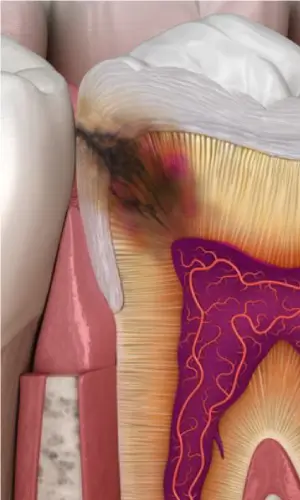
What can you do to prevent tooth decay?
- Brush your teeth at least twice a day with fluoride toothpaste; brushing before bed is particularly important;
- Floss between your teeth at least once a day, ideally in the evening;
- Eat nutritionally balanced meals and minimise snacking between meals;
- Visit your dentist regularly.
How can I tell if I have tooth decay?
A cavity, fracture, sensitivity or pain may indicate decay, but early lesions may produce no symptoms. Clinical examination and, when indicated, an X-ray help distinguish decay from staining, wear or other problems. The interval between appointments should be determined according to individual risk, and no frequency alone prevents new lesions from developing.
Guide to treatment
When treatment may be needed
- Tooth decay identified during a clinical examination or on an X-ray.
- A fractured, chipped or worn tooth, or a leaking or broken restoration.
- Sensitivity to cold, heat or sweet foods that requires diagnosis.
- Discolouration, a visible cavity or dental floss that repeatedly catches.
Expected duration
Many direct restorations can be completed in one appointment. Deep lesions, multiple teeth or indirect restorations may require more sessions. Duration is confirmed after diagnosis.
How the process works
-
01
Diagnosis
Examination of the tooth, tests and an X-ray when needed to determine the depth of the lesion.
-
02
Choosing the treatment
Assessment of conservative options, a direct restoration or another solution when there is extensive structural loss.
-
03
Lesion removal
Cleaning the affected tissue and preparing the tooth, with local anaesthetic when indicated.
-
04
Restoration
Rebuilding the tooth's shape and contact with a suitable material, followed by bite adjustment and polishing.
-
05
Monitoring
Assessment of sensitivity, hygiene and the integrity of the restoration at regular appointments.
Important care
- Wait until the anaesthetic has worn off before chewing to avoid biting your cheek or tongue.
- Continue brushing with fluoride toothpaste and cleaning between your teeth daily.
- Reduce the frequency of sugar intake and acidic drinks.
- Contact the clinic if your bite feels high, pain increases or part of the restoration breaks.
Cost estimate
The cost is determined after examining the tooth.
A small restoration and an extensive reconstruction require different approaches. After diagnosis, we explain the treatment and its cost.
Book an appointmentAt the appointment, we confirm suitability, the expected timeframe and a cost estimate tailored to your case.
Frequently asked questions
Can tooth decay have no symptoms?
Yes. There may be no pain in the early stages. Sensitivity, a cavity or spontaneous pain tend to appear as the lesion progresses, which is why regular examinations may allow more conservative treatment.
Are all dark stains tooth decay?
No. Staining, tartar, wear and old materials can change colour. Only a clinical examination and, when necessary, an X-ray can provide a diagnosis.
Can early tooth decay be stopped without a restoration?
Some lesions without a cavity can be controlled with fluoride, hygiene, diet and monitoring. Once there is a cavity or structural loss, a restoration is often necessary.
Does a dental restoration hurt?
When sensitivity is expected, treatment can be carried out under local anaesthetic. Temporary sensitivity afterwards is possible, particularly with deep lesions.
How long does a restoration last?
There is no guaranteed lifespan. It depends on size, material, position, bite, hygiene, diet and habits such as tooth grinding. Check-ups allow wear or leakage to be detected.
Should an old restoration always be replaced?
No. Replacement removes more tooth structure and should only be carried out when indicated, for example because of a fracture, leakage, associated decay, functional failure or a justified clinical need.
What happens if decay reaches the nerve?
When the pulp is affected, root canal treatment, a more extensive restoration or extraction if the tooth cannot be saved may be necessary. The decision depends on the diagnosis.
How much does a restoration cost?
The cost depends on the size and complexity of the restoration. After examining the tooth, we explain the treatment needed and its price.