
-
National mobile call charges apply
-
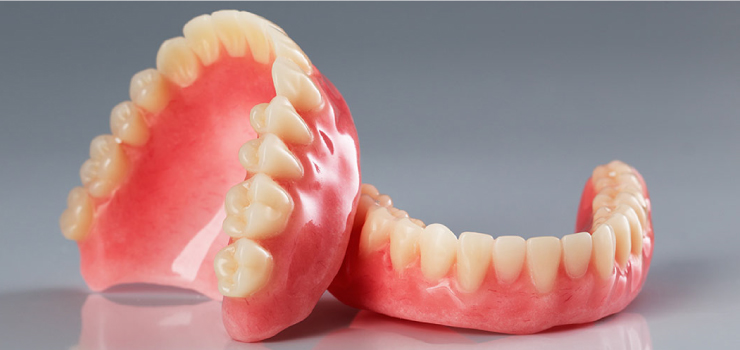
Dental prostheses replace one or more missing teeth and can restore some chewing function, speech and the appearance of the smile. They may be removable or fixed and supported by teeth, the oral mucosa, implants or a combination of these structures. The choice depends on oral health, available support, ability to maintain hygiene and the person's preferences.
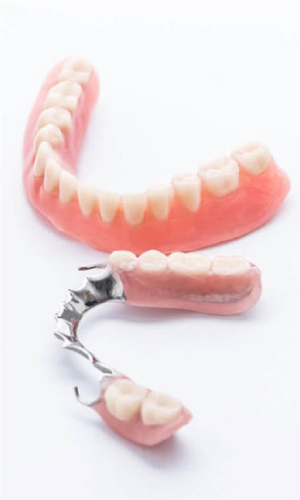
Removable dentures
- Acrylic dentures are supported by the oral mucosa and retained by fitting closely against the mucosal tissues, so they are typically bulkier.
- Metal-framework dentures are tooth-supported. A metal framework at the base has clasps and rests that sit on the teeth, providing greater retention than acrylic dentures and a smaller body.
Fixed prostheses
Fixed prostheses are not removed daily by the patient and may be supported by teeth or implants using cemented or screw-retained systems. They may provide greater stability in suitable situations, but require sufficient clinical support, careful hygiene and maintenance. A removable alternative may be preferable when easier cleaning, future adaptation of the prosthesis or avoiding additional procedures is needed.
Guide to treatment
When they may be suitable
- Replacing some or all missing teeth.
- Restoring chewing, speech, tissue support and the appearance of the smile.
- Replacing a loose, worn, broken or ill-fitting prosthesis.
- Removable or fixed rehabilitation supported by teeth or implants, as appropriate.
Expected duration
A definitive removable denture usually requires several appointments over a few weeks. Fixed or implant-supported solutions may take longer, particularly if extractions, healing, implants or preliminary treatments are needed.
How the process works
-
01
Assessment
Examination of the teeth, gums, bone, bite, current prosthesis and expectations.
-
02
Choosing the solution
Comparison of removable dentures, crowns, bridges and implant-supported solutions, including limitations and maintenance.
-
03
Records
Impressions or a scan, bite records, selection of shape and colour, and any trial fittings.
-
04
Fitting
Fitting the prosthesis and checking retention, comfort, speech and chewing contacts.
-
05
Adjustments and reviews
Appointments to relieve pressure areas and monitor changes in the mouth over time.
Important care
- Clean the prosthesis and the teeth or implants supporting it daily.
- Remove removable dentures at night unless advised otherwise by the clinician.
- Avoid very hot water and abrasive pastes on removable dentures.
- Book an adjustment if you experience pain, sores, instability, a fracture or changes in speech and chewing.
Cost estimate
The cost estimate is personalised.
The cost depends on the type of prosthesis, materials and number of teeth to be replaced. After assessment, we present the options and their cost estimates.
Book an appointmentAt the appointment, we confirm suitability, the expected timeframe and a cost estimate tailored to your case.
Frequently asked questions
What is the difference between a fixed and a removable prosthesis?
A removable prosthesis can be taken out by the patient for cleaning. A fixed prosthesis is cemented or screwed onto teeth or implants and should only be removed by a professional. Suitability depends on the mouth, health, goals and budget.
How long does it take to make a prosthesis?
A removable denture usually requires several appointments over a few weeks. Fixed prostheses and implant-supported treatments may take longer because of preparation, healing and trial fittings.
Is it normal for a new denture to hurt?
There may be pressure and an unfamiliar feeling during the first few days, but sores and pain should not be tolerated indefinitely. Small adjustments at the clinic are common during adaptation.
Should I sleep with my removable denture?
As a general rule, it should be removed at night to let the tissues rest and allow cleaning, unless the dentist advises otherwise for a specific situation.
How do you clean a removable denture?
It should be removed and brushed with a non-abrasive product over water or a towel to prevent breakage if dropped. The teeth, gums and tongue also need cleaning.
How long does a prosthesis last?
It can last several years, but the mouth changes over time and the prosthesis may wear, fracture or no longer fit properly. Regular reviews allow a decision on adjustment, relining, repair or replacement.
Can a loose prosthesis be repaired with glue?
Do not use household glues, as they may be toxic, prevent proper repair and alter the fit. Keep the pieces and bring them to the clinic for assessment.
How much does a dental prosthesis cost?
The cost depends on the type of prosthesis, materials and number of teeth to be replaced. After assessment, we present the options and their cost estimates.