
-
National mobile call charges apply
-
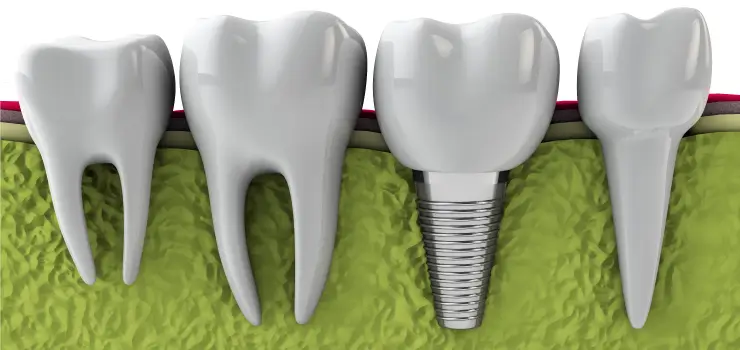
Dental implants can replace one or more missing teeth and support crowns, bridges or prostheses. Suitability depends on general and oral health, available bone, gum condition and the ability to maintain adequate hygiene.
At the assessment appointment, the alternatives, benefits, risks and expected stages for your particular case are discussed. The outcome and duration cannot be guaranteed and also depend on healing and maintenance over time.
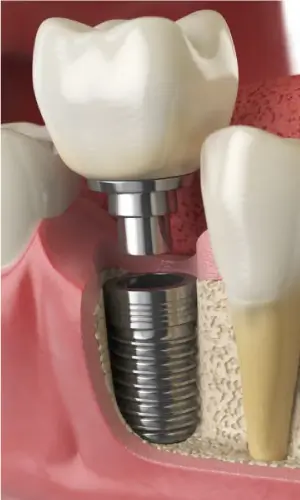
Benefits of
dental implants
When clinically indicated, implants can improve the stability of the rehabilitation, chewing and the appearance of the smile. The most suitable solution is chosen after comparing implants, bridges and removable dentures.
- Improved Appearance
- Durability
- Restoring natural tooth function
- Improved Oral Health
- Comfort
- Ease of Maintenance
Full-arch rehabilitation
In some cases of extensive tooth loss, full-arch implant-supported rehabilitation may be considered. The number and position of implants are determined through clinical examination and imaging; four implants per jaw are one possibility, but not a rule that applies to everyone.
Fitting a temporary prosthesis on the same day depends on the initial stability of the implants, the bone, the bite and other clinical factors. When these conditions are not met, healing is necessary before the prosthetic stage.
Guide to treatment
When they may be suitable
- Replacing a missing tooth without supporting the new crown on neighbouring teeth.
- Replacing several missing teeth with implant-supported crowns, bridges or prostheses.
- Improving the stability of a removable denture when clinically indicated.
- Full rehabilitation of one or both arches in selected patients.
Expected duration
Planning may be completed at the first appointment or require additional tests. Implant integration into the bone usually takes around 3 to 6 months and may take longer when bone grafting is necessary. The total time depends on healing, the number of implants and the type of prosthesis.
How the process works
-
01
Assessment and diagnosis
Clinical examination, medical history and imaging to assess the bone, gums and relationship between the jaws.
-
02
Individual plan
Determining the number and position of implants, any preliminary treatment needed, the temporary solution and the final prosthesis.
-
03
Surgical stage
Placing the implant in the bone, usually under local anaesthetic, followed by postoperative instructions.
-
04
Healing
The period during which the implant integrates with the bone. In selected cases a temporary solution may be available, but immediate loading is not suitable for everyone.
-
05
Prosthetic stage and maintenance
Records to make the crown or prosthesis, fitting of the final solution and regular follow-up appointments.
Important care
- Follow the hygiene, dietary and medication instructions provided after surgery.
- Do not smoke, as tobacco increases the risk of complications and failure.
- Brush carefully and clean the recommended spaces with floss or interdental brushes.
- Attend check-ups and professional cleaning appointments at the frequency set for your risk level.
Cost estimate
The cost estimate is personalised.
The cost varies according to the number of implants, the need for grafting and the type of prosthesis. After assessment, we provide a cost estimate covering all planned stages.
Book an appointmentAt the appointment, we confirm suitability, the expected timeframe and a cost estimate tailored to your case.
Frequently asked questions
Who can have dental implants?
Suitability depends on general and oral health, completed bone growth, the quantity and quality of bone and the ability to maintain good hygiene. Active gum disease and tooth decay should be assessed and controlled before surgery.
Can an implant be placed when there is little bone?
Sometimes, yes. Clinical examination and imaging can assess whether the existing bone can be used or a regeneration or grafting procedure is needed. Not every case requires grafting.
Does having an implant fitted hurt?
The procedure is usually carried out under local anaesthetic. After surgery, there may be temporary pain, swelling or discomfort, managed according to clinical instructions. Severe pain, persistent bleeding or worsening symptoms should be reported to the clinic.
Can implants be rejected?
There is no typical allergic rejection of titanium, but the implant may fail to integrate with the bone or lose support over time. Smoking, infection, periodontal disease, poor hygiene, excessive loading and some health conditions increase the risk.
How long does implant treatment take?
Healing within the bone usually takes 3 to 6 months and may take longer when grafting or other procedures are needed. The complete plan includes diagnosis, surgery, healing and the prosthetic stage.
Is it possible to have fixed teeth on the same day?
In selected cases, a temporary prosthesis can be fitted on the same day or shortly afterwards. The decision depends on implant stability, bone, bite and the clinical plan; this is not guaranteed for every patient.
How long can implants last?
They can last for many years or decades, but are not inherently lifelong. Durability depends on hygiene, maintenance, gum health, habits such as smoking and management of chewing forces.
How much does a dental implant cost?
The cost varies according to the number of implants, the need for grafting and the type of prosthesis. After assessment, we provide a cost estimate covering all planned stages.